

Independent automation module
Independent Automation Module: A Self-Contained Solution for Modern Automation An independent automation module is a self-contained, plug-and-play system designed to perform specific tasks autonomously without requiring continuous external intervention. These modules integrate hardware, software, and control mechanisms to execute predefined operations efficiently, making them ideal for industrial, commercial, and even residential applications. Core Features 1. Self-Sufficiency – The module operates independently, equipped with its own power supply, processing unit, sensors, and actuators. It can make real-time decisions based on input data without relying on a central control system. 2. Modularity & Scalability – Designed for flexibility, these modules can be easily integrated into existing systems or expanded by adding complementary units. Their plug-and-play nature reduces installation complexity. 3. Adaptive Intelligence – Many independent automation modules incorporate machine learning or rule-based logic to optimize performance over time, adjusting to environmental changes or operational demands. 4. Communication Capabilities – While autonomous, they often support wired or wireless communication (e.g., IoT protocols) for remote monitoring, data logging, or coordination with other systems. Applications - Industrial Automation – Performing repetitive tasks like sorting, assembly, or quality inspection in manufacturing lines. - Smart Buildings – Managing lighting, HVAC, or security systems autonomously to enhance energy efficiency. - Agriculture – Monitoring soil conditions and automating irrigation without human oversight. - Logistics – Enabling autonomous mobile robots (AMRs) to navigate warehouses and transport goods. Advantages - Reduced Downtime – Since the module operates independently, failures in one unit do not disrupt the entire system. - Cost Efficiency – Eliminates the need for extensive wiring or centralized control infrastructure. - Quick Deployment – Pre-configured functionality allows for rapid implementation in diverse environments. Future Trends As edge computing and AI advance, independent automation modules will become even more intelligent, capable of handling complex decision-making in real time. Their role in Industry 4.0 and smart ecosystems will continue to grow, driving efficiency and innovation across sectors. In summary, independent automation modules represent a key evolution in automation technology, offering reliability, flexibility, and efficiency for a wide range of applications. Their ability to function autonomously while integrating seamlessly into larger systems makes them a cornerstone of modern automation solutions.
Products
Category:
-
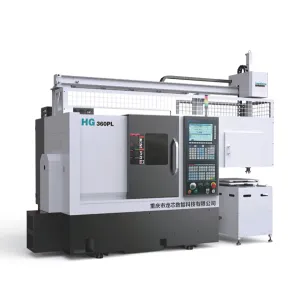
Standalone automation module
Category: Automation SeriesBrowse number: 8Number:Release time: 2025-12-11 14:35:54Standalone automation module refer to automated systems composed of multiple independent modules. Each module has specific functions and tasks, and can be combined and configured as needed. This type of equipment typically includes multiple technologies such as mechanical, electrical, electronic, and software, enabling highly automated production processes.1. Improve production efficiency: Independent automation module can achieve high-speed, continuous, and precise production, greatly improving production efficiency. Compared to traditional manual operations, it can complete tasks more quickl...
News
Category:
-
[Industry News]Difficulties in achieving the special process requirements o...
2025-12-13 11:21:19
Case
Category:
No search results found!
Video
Category:
No search results found!
Download
Category:
No search results found!
Job
Category:
No search results found!
Featured Products
No search results found!



 Phone
Phone