

Stamping machine tool
Stamping Machine Tool: An Overview A stamping machine tool is a specialized piece of equipment used in manufacturing to shape, cut, or form metal sheets and other materials through high-pressure pressing. It is widely employed in industries such as automotive, aerospace, electronics, and appliance production due to its efficiency, precision, and ability to mass-produce components with consistent quality. Key Components and Functionality A stamping machine typically consists of the following major components: 1. Frame & Bed – The robust structure supports the entire machine, ensuring stability during high-force operations. 2. Punch & Die Set – The punch (upper tool) and die (lower tool) work together to deform the material into the desired shape. 3. Hydraulic or Mechanical Drive System – Hydraulic stamping machines use fluid pressure for smooth force application, while mechanical types rely on flywheels and crankshafts for high-speed operations. 4. Feeding System – Automated feeders ensure precise material positioning for continuous production. 5. Control System – Modern stamping machines incorporate CNC (Computer Numerical Control) for programmable precision and repeatability. Types of Stamping Machines - Mechanical Presses – Ideal for high-speed stamping with consistent force. - Hydraulic Presses – Provide variable force and stroke control, suitable for deep drawing and complex shapes. - Servo Presses – Offer programmable motion and energy efficiency, reducing waste and improving accuracy. - Progressive Die Stamping Machines – Perform multiple operations (cutting, bending, punching) in a single pass. Applications Stamping machines produce a wide range of parts, including: - Automotive panels, brackets, and chassis components - Electronic enclosures and connectors - Household appliances like sinks and metal casings - Aerospace structural parts Advantages - High Productivity – Capable of producing thousands of parts per hour. - Precision & Consistency – Ensures tight tolerances and uniform quality. - Material Efficiency – Minimizes waste through optimized die designs. - Versatility – Works with various metals (steel, aluminum, copper) and non-metal materials. Challenges & Considerations - Tooling Costs – High initial investment in dies and molds. - Maintenance – Regular lubrication and inspection are necessary to prevent wear. - Safety – Requires proper guarding and operator training due to high-force operations. Future Trends Advancements in automation, AI-driven quality control, and energy-efficient servo technology are shaping the future of stamping machines, making them smarter and more sustainable. In summary, stamping machine tools are indispensable in modern manufacturing, offering speed, precision, and versatility for mass production of metal components. Their continuous evolution ensures they remain a cornerstone of industrial fabrication.
Products
Category:
-
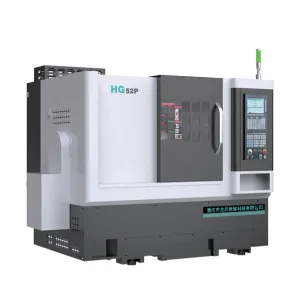
HG52 Precision Manufacturing Machine Tool
Category: HG SeriesBrowse number: 5Number:Release time: 2025-12-11 14:14:55When processing HG52 Precision Manufacturing Machine Tool, the cutting tool performs intermittent cutting, and any material formed workpiece can be cut in a relatively short time, making it easy to automatically remove chips. In addition, intermittent chip cutting can provide sufficient time for the tool to cool, reduce thermal deformation of the workpiece, and improve the tool's lifespan.Compared with traditional CNC machine tools, Precision Manufacturing Machine Tool have higher turning and milling speeds, better cutting product quality, reduced cutting forces, improved accuracy of thin-...
News
Category:
-
[Industry News]Application of Ball Screw in HG52 Precision Manufacturing Ma...
2025-12-12 16:52:42
Case
Category:
No search results found!
Video
Category:
No search results found!
Download
Category:
No search results found!
Job
Category:
No search results found!
Featured Products
No search results found!



 Phone
Phone